District-wide homelessness count
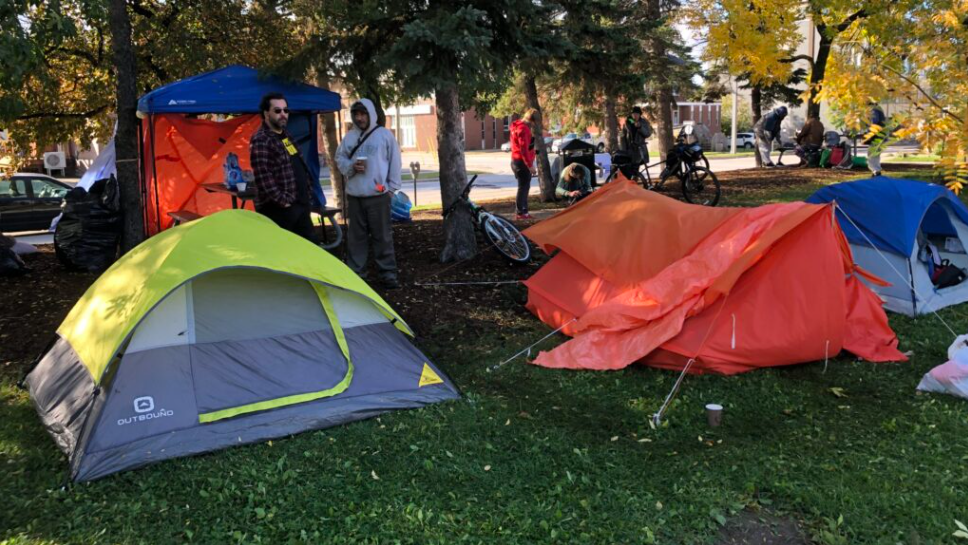
The count identified 452 individuals experiencing homelessness, compared to 531 in 2024
During a 24-hour period starting on October 8, 2025, social service agencies, homelessness service providers, health care facilities, and correctional facilities across Nipissing District took part in an administrative enumeration of homelessness, known locally as Nipissing Counts 2025.
The count identified 452 individuals experiencing homelessness, compared to 531 in 2024. While the raw numbers appear lower, differences in enumeration methods must be considered. Administrative counts do not capture hidden homelessness, such as people couch surfing or temporarily staying with family or friends.
When hidden homelessness is removed from the 2024 results, the comparable figure is 448 individuals, showing a slight 1% increase from 2024 to 2025. To help the public understand why the 2025 enumeration differed from 2024, it is important to note that under updated federal standards introduced in 2024, communities are now required to complete a full Point-in-Time (PiT) Count every three years, with administrative enumerations in the years between. Because 2025 was an administrative year, this count did not include surveys and could not capture hidden homelessness.
The next full PiT Count will take place in October 2027. Nipissing Counts 2025 was overseen by the District of Nipissing Social Services Administration Board (DNSSAB), supported by members of the Community Advisory Board. The initiative was funded by the Government of Canada’s Reaching Home Strategy. The objective of Nipissing Counts 2025 is to gather demographic, numerical, and community needs information to better understand the challenges facing individuals experiencing homelessness in the District.
On the night of October 8, 2025, there were: • 130 individuals staying in emergency or violence against women shelters, which includes families with children • 153 individuals staying in unsheltered locations, including encampments and vehicles • 92 individuals staying in public institutions with no fixed address (health care, treatment, correctional facilities) • 77 individuals staying in a transitional housing program Gender: • 62% identified as male • 37% identified as female • 1% identified as gender diverse Age: • 10% youth (16-24 years of age) • 27% young adults (25-34 years of age) • 60% adults (35-64 years of age) • 3% seniors (65+ years of age) Geographic Location: • 387 – North Bay • 13 –
Mattawa • 52 – West Nipissing Indigenous demographics: • 35% of the enumerated homeless population self-identified as Indigenous • The percentage is higher (43%) amongst unsheltered individuals
“These numbers remind us that behind every data point is a person, a family, and a story,” said Mark King, DNSSAB Board Chair. “Addressing homelessness is not something any one organization can solve alone. It takes community partners, local groups, municipalities, and residents working together, and it takes strong support from both the provincial and federal governments. DNSSAB will continue advocating for the resources and solutions our communities need, but we need everyone at the table.
Homelessness is becoming a larger and more complex challenge, and meaningful progress will only come through collective action.” Methodological Note: The homeless population is always difficult to enumerate with complete accuracy. By extension, making direct comparisons between PiT Counts must always consider factors such as changes and improvements in surveying and sampling techniques: (e.g., search and count locations, number of volunteers, geographical locations); seasonal differences/effects; and the definitions of homelessness used in the study.