Ontario Fast-Tracks Barrie to Sudbury Transmission Line with First Nation Partnership
Transmission project will create over 9,000 jobs, drive economic growth and advance economic opportunities for Indigenous communities
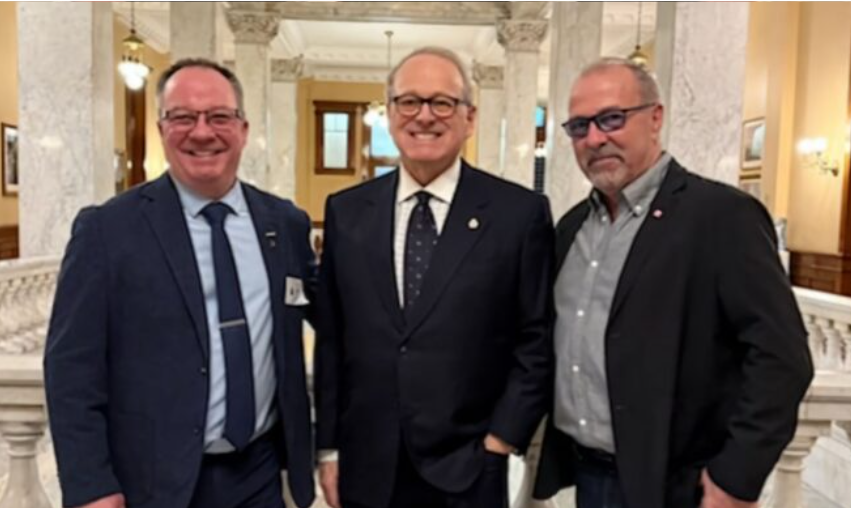
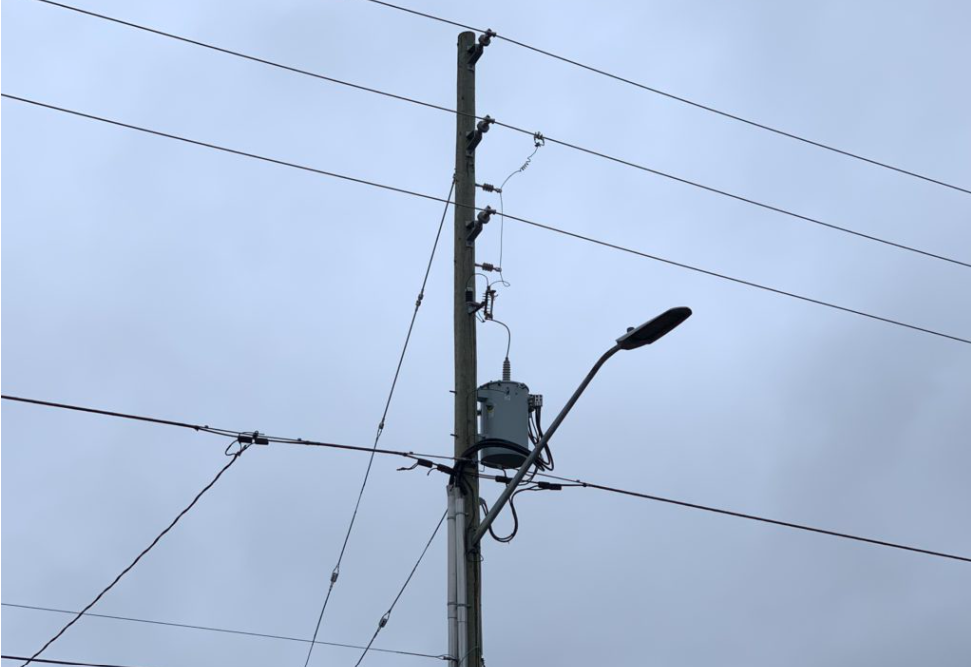
As part of its plan to protect Ontario and build a stronger, self-reliant economy, the government is taking a major step to power northern Ontario and build economic partnership opportunities with Indigenous communities by declaring the Barrie to Sudbury transmission line as a priority project and designating Hydro One to develop and construct it. Today, Sam Oosterhoff, Associate Minister of Energy-Intensive Industries, was joined by Chiefs from the Energy Corridor First Nations (ECFN) and surrounding First Nations to announce the province is accelerating construction of the new single-circuit 500-kilovolt transmission line that will run approximately 290 kilometres from the Essa Transformer Station near Barrie to the Hanmer Transformer Station in Sudbury. The Barrie to Sudbury line will create capacity to deliver up to 1,500MW to the north and 1,000MW to the south.
The Barrie to Sudbury line will create more than 9,000 jobs and is part of the government’s broader plan to protect Ontario by driving economic growth in the North, supporting mining sector development and reshoring Ontario’s domestic supply chains. The government and Hydro One have also committed to leveraging the Canadian and Ontario supply chain, building on Hydro One’s successful track record that saw 93 per cent of their $2.9 billion spend in 2024 going to companies based in Canada, supporting thousands of Canadian workers.

“Transmission investments are a crucial part of our plan to meet growing electricity demand across Ontario,” said Sam Oosterhoff, Associate Minister of Energy-Intensive Industries. “These new transmission lines will deliver the power needed to support our people and our industries, and they will drive economic growth across northern Ontario for decades to come. We’re especially pleased to be moving ahead on this project in partnership with the ECFN, whose leadership will be critical to its success and will leave a lasting impact on Ontario’s energy grid.”
Northern Ontario faces a significant transmission bottleneck because its electricity grid was originally designed to serve small, widely dispersed communities and resource-based industries, not the growing demand from mining expansion, electrification, and new industrial projects. With energy demand in the north alone expected to increase 81 per cent by 2050, and recent reports predicting 41 potential new mines projected by 2033, the Independent Electricity System Operator’s (IESO) Northern Ontario Bulk Study identified a bottleneck between northern and southern Ontario. The IESO has recommended a two-phase approach:
- Phase 1 is a single-circuit 500-kilovolt transmission line running 290 kilometres from Barrie to Sudbury, that is expected to be in-service in 2032.
- Phase 2 is a second single-circuit 500-kilovolt line that will undergo early development work at this time to ensure the project can materialize quickly when more transmission capacity between northern and southern Ontario is needed.
To support the construction of this line, in Ottawa on December 4, 2025, Minister Lecce signed a Memorandum of Understanding (MOU) with the ECFN consortium that establishes shared objectives, principles of cooperation, and a framework for joint engagement on this project. The consortium is expected to grow as additional First Nations join over time.
“With up to 40 new mines expected to start by 2033 alone, Ontario is building for the future by accelerating a critical transmission line that will energize the north and boost the economy,” said Stephen Lecce, Minister of Energy and Mines. “Built in true partnership with First Nations, this new line will significantly increase power flow from the south to the north to improve quality of life and unlock responsible resource development across the north. As we navigate global uncertainty, Ontario's plan is driving Canadian self reliance as we build using over 90 per cent made-in-Canada materials. Ontario's Integrated Energy Plan expands the grid to boost reliability, add more capacity, and attract job creating investment to Ontario.”
This transmission project will provide significant partnership and participation opportunities for Indigenous communities, helping to advance economic reconciliation. First Nations will also have access to Hydro One’s First Nations Equity Partnership Model, which will include First Nation leadership in decision-making and 50 per cent ownership of the line. This marks a significant advancement in economic reconciliation with Indigenous peoples of Ontario to drive economic growth and build and upgrade infrastructure in Northern Ontario.
“The 11-member Energy Corridor First Nations recognize that the Sudbury-to-Barrie transmission corridor must be reinforced to meet future energy needs and support a strong, thriving Ontario,” said Adam Pawis, Chief of the Shawanaga First Nation on behalf of the Energy Corridor First Nations. “In anticipation of today’s announcement, we approached the Minister of Energy and proposed a new strategy for ensuring that the new Sudbury-to-Barrie transmission lines will be completed expeditiously and in a manner that is consistent with our inherent rights, our deep responsibility to the land, and our rightful role in shaping the economic future of our territories. That dialogue resulted in a precedent-setting Memorandum of Understanding between the Ministry and the Energy Corridor First Nations, designed to provide guidance to Hydro One Networks on how to engage with and integrate our member First Nations in the planning, design, construction, ownership and operation of this major transmission project. We anticipate that real First Nation participation in the project will clear away unnecessary delays and roadblocks, and advance prosperity in our communities through First Nation ownership and participation in employment and contracting opportunities, business ventures, and through long-term involvement in the management of energy infrastructure within our lands. The Energy Corridor First Nations congratulate Hydro One on designation as project developer. We look forward to working with Hydro One as together we jointly contribute to an energy future that is stable for the province and prosperous for First Nations.”
Energy For Generations, Ontario’s first integrated energy plan, highlights the importance of advancing new transmission infrastructure across the province that supports economic growth for Ontario families and businesses, drives economic growth in northern Ontario, and supports key industries such as mining for critical minerals. The plan also highlights Ontario’s commitment to enabling Indigenous leadership and partnership in the development of energy infrastructure, and that new transmission lines present an important opportunity to advance economic opportunities for Indigenous communities.
Quick Facts
- The government has issued an Order-In-Council (OIC) and a Minister’s Directive to the Ontario Energy Board (OEB) to amend Hydro One’s transmission licence, formally designating them as the transmitter for the Barrie to Sudbury transmission lines.
- A separate OIC has also designated one of the new transmission lines, expected to be in service in 2032, as a priority project, helping to reduce the risk of delays.
- The Energy Corridor First Nations (ECFN) consortium currently includes Henvey Inlet, Dokis, Shawanaga, Wahnapitae, Magnetwan, Moose Deer Point, Nipissing, Atikmeksheng, Alderville, Wasauksing and Mississauga of Scugog Island First Nations.
- The Ministry of Energy and Mines undertook consultation on the proposed Barrie to Sudbury lines in relation to the OICs and Directive on the Environmental Registry of Ontario.